

Canned Fish Shelf Life · Vintage Seafood · Long-Term Aging
Canned Fish Shelf Life: Does It Expire?
Canned fish shelf life is often misunderstood. A printed date does not always tell the full story of commercial sterilization, careful storage and the slow evolution of premium seafood in oil.
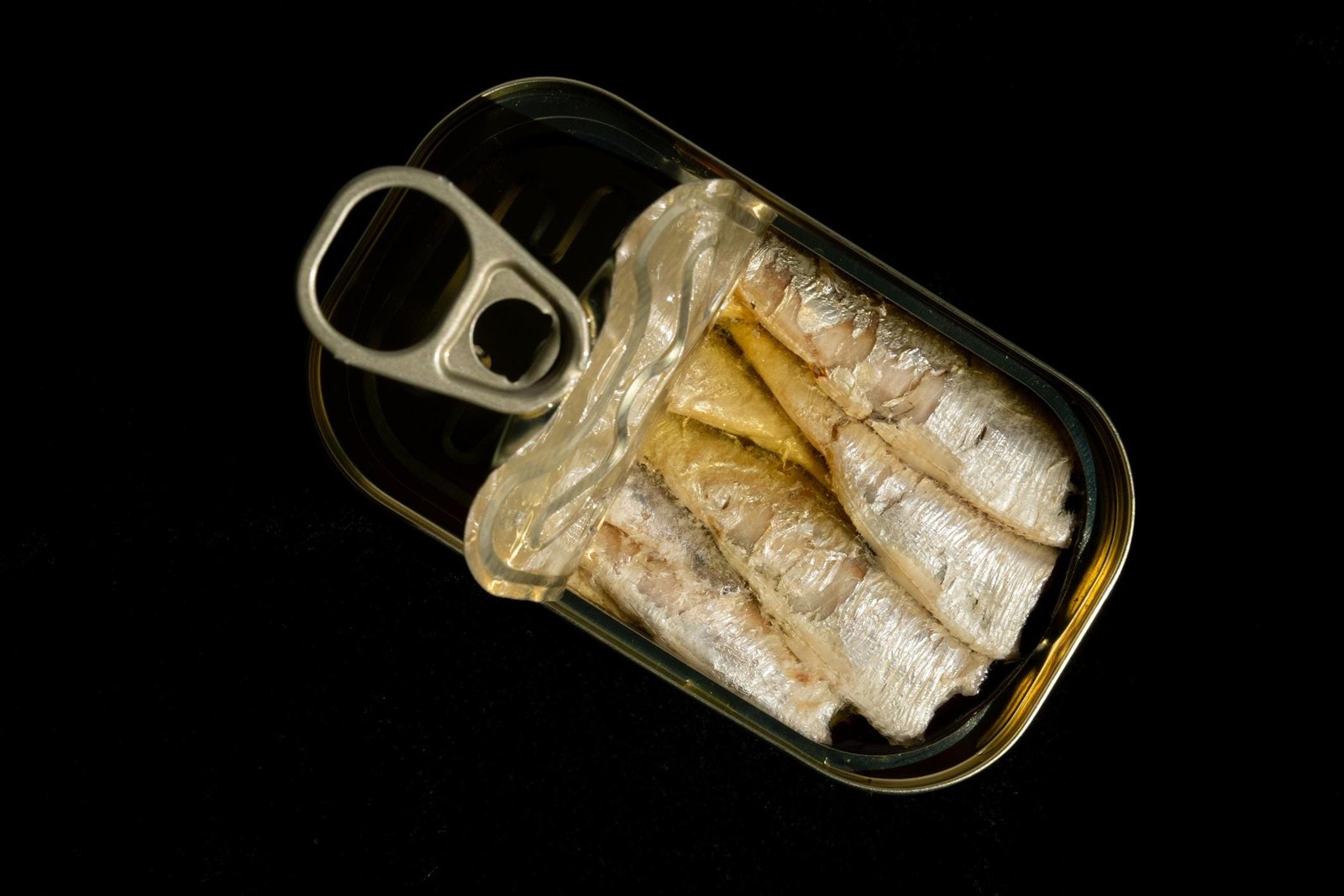
Canned fish shelf life is one of the most misunderstood topics in preserved seafood. Many people assume that once the printed date has passed, a tin instantly becomes unsafe or worthless. In reality, premium canned seafood has a much more complex relationship with time, storage and quality evolution.
For most consumers, canned fish is practical food. It sits in the pantry, waits quietly and is opened when needed. But in parts of Europe, especially in France, Spain and Portugal, certain tins are treated very differently. Some sardines are intentionally aged for years, collected by vintage, rotated during storage and opened with the same curiosity usually reserved for wine or cheese.
The question is not only whether canned fish can last. The more interesting question is what happens inside a well-made tin over time.
What Determines Canned Fish Shelf Life?
Modern canned seafood depends on commercial sterilization. During production, sealed cans are exposed to controlled heat treatment designed to eliminate harmful microorganisms and stabilize the product for long-term storage.
When the can remains intact and the product is stored correctly, canned fish can remain stable far beyond the printed best-before date. The date is usually a quality guideline, not an automatic safety deadline.
Several factors influence long-term quality:
- airtight sealing
- thermal processing and commercial sterilization
- quality of the fish and oil
- storage temperature
- protection from direct light
- absence of swelling, corrosion or leakage
A useful general overview of canned seafood shelf life is provided by Tonninowhich explains why proper storage and can condition matter so much for long-term quality.
Canned Fish Shelf Life and the Millésime Tradition
In gourmet seafood culture, aging canned fish is not a strange new idea. French millésime sardines are produced from a specific year’s catch and often kept for several years before opening.
The word millésime is more commonly associated with wine vintages, but it also appears in the world of premium sardines. A tin can represent a particular season, producer, fishing area and preparation style.
Collectors sometimes rotate these tins once or twice a year so the oil continues to move through the fish evenly. Over time, the texture can become softer, the oil more aromatic and the flavor more integrated.
The millésime tradition is described in more detail by Le Gourmet Centralwhich explains why certain vintage sardines are valued by collectors and enthusiasts.
Stability comes from processing
Commercial sterilization and an intact sealed can are the foundation of long-term canned seafood stability.
Canned Fish Shelf Life Can Evolve Slowly
In premium tins, oil, fish and time may create a smoother texture and a more integrated flavor profile.
How Canned Fish Shelf Life Changes Flavor Over Time
Long-term aging does not mean rotting in the ordinary sense. In a commercially sterilized and properly sealed can, the internal environment is stable. The changes that interest collectors are usually gradual sensory changes rather than spoilage.
Texture Becomes Softer
Over time, fish fibers may become more delicate. This is why older sardines are sometimes described as silkier, creamier or more tender than very young tins.
Oil Carries Flavor
Oil is not only a preservation medium. It also carries aroma. During long storage, the oil and fish slowly influence each other. Smoke, salt and natural fish oils can become more rounded and integrated.
Smoke Becomes Less Aggressive
In smoked fish, time can soften sharp smoky notes. The result may feel less direct but more balanced, especially when the fish was gently smoked before canning.
Color and Aroma May Evolve
Natural color changes may appear over many years. This does not automatically mean the product is unsafe. However, swollen cans, leaking cans, strong unpleasant odor or damaged packaging are warning signs and should always be treated seriously.
Canned Fish Shelf Life vs. Expiration Dates
One of the biggest misunderstandings around canned food comes from the printed date. In many markets, a best-before date indicates the period during which the producer guarantees optimal quality. It does not always mean the food becomes unsafe the next day.
That distinction matters especially for canned seafood. A tin can be past its best-before date and still be stable, but it must be judged by production method, storage history and can condition.
This is also where premium canned fish differs from ordinary pantry food. In the world of vintage sardines, time is sometimes part of the experience.
Aged canned fish should never be judged by date alone. The integrity of the can, the storage conditions and the original production process are essential.
Beyond Sardines: Freshwater Fish and Time
Most discussions about aged canned seafood focus on sardines from Atlantic coastal regions. But the same broader questions can also be asked about other carefully preserved fish.
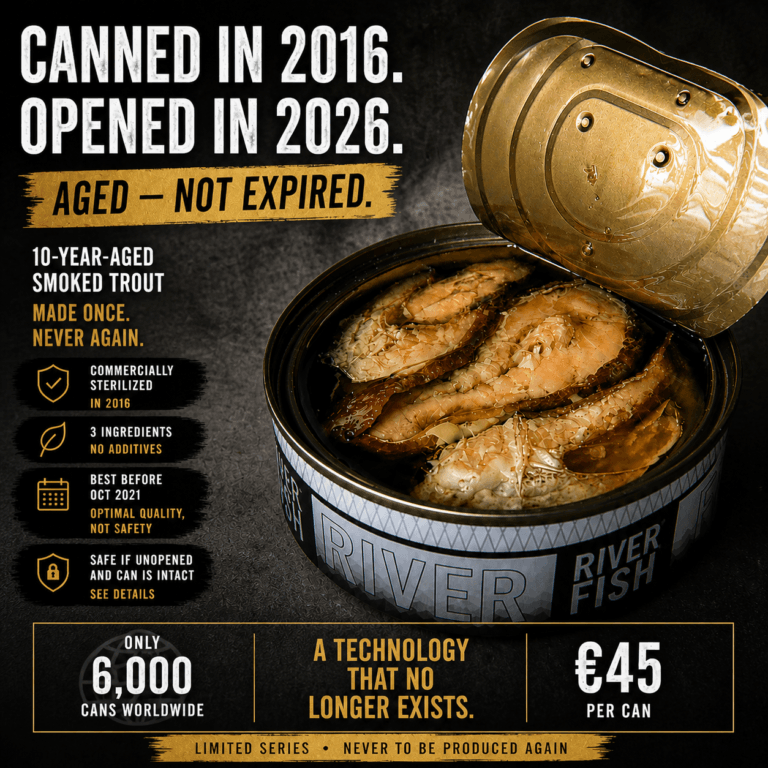
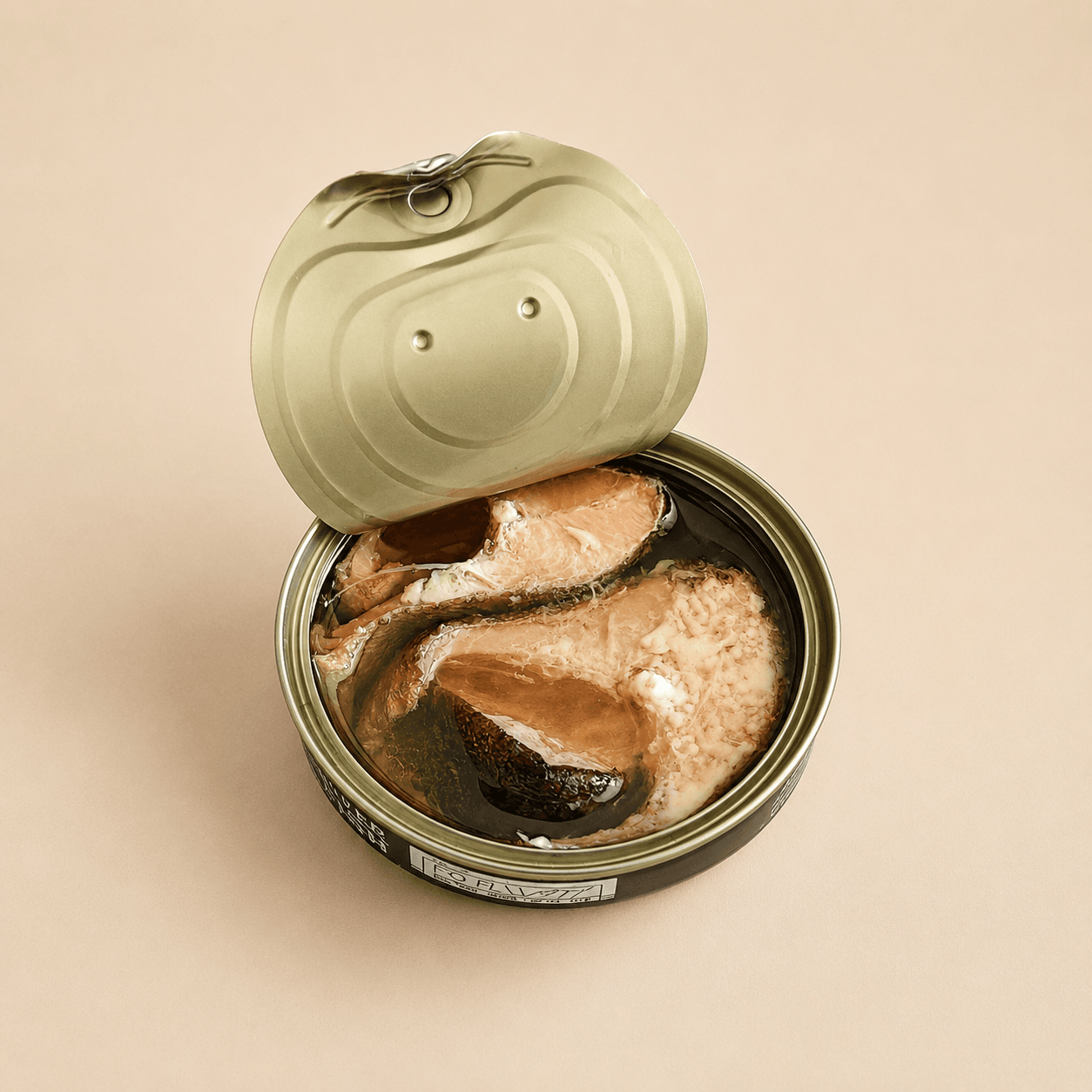
Last Catch 2016 is an unusual example from Serbia. It is a remaining production batch of lightly smoked rainbow trout, canned in 2016 using the proprietary freshwater fish preservation technology developed by River Fish.
The trout was preserved in sunflower oil and remained sealed for nearly a decade. What began as a production batch gradually became something closer to a rare aging experiment in canned freshwater fish.
This is what makes Last Catch 2016 different from ordinary canned seafood. It is not only a product, but also a time capsule from a lost River Fish technology and a disappearing production era.
Can Canned Fish Improve With Age?
The honest answer is that not every canned fish improves with age. Mass-market tins are usually designed for consistent everyday consumption, not long-term gourmet aging.
But some premium products can become more interesting over time when they are properly produced, sealed and stored. This is why millésime sardines have developed a collector culture.
The comparison with wine is not perfect, but it is useful. Time does not magically improve every bottle. It only rewards the right product under the right conditions.
The same idea applies to canned fish.
The Future of Vintage Canned Seafood
As more people discover premium tinned fish, the old idea of canned food as cheap emergency food is beginning to change.
Today, enthusiasts are exploring conservas, millésime sardines, smoked fish, rare producers and limited batches with genuine curiosity. A well-made tin can carry a year, a place, a technology and a story.
Last Catch 2016 belongs to that conversation. It offers a rare freshwater interpretation of a tradition usually associated with sardines and coastal canneries.
For some people, a ten-year-old can of fish sounds impossible. For others, it is exactly what makes the story worth opening.
Discover Last Catch 2016
A rare decade-aged smoked trout from Serbia, commercially sterilized in 2016 and preserved as one of the last remaining examples of River Fish freshwater canning technology.
Discover Last Catch 2016