

Adriatic fish canneries · Dalmatia · Vintage sardine culture
Adriatic Fish Canneries: The Silver Ghosts of the Adriatic
Adriatic fish canneries are a story of disappearing coastal industries, forgotten workers and one of Europe’s most overlooked seafood traditions.

Adriatic fish canneries are the story of disappearing coastal industries, forgotten workers and a culinary culture that once shaped the eastern Adriatic. Along the Dalmatian coast, generations of fishermen, factory workers and small family producers built one of Europe’s most overlooked seafood traditions. Research projects such as Fishing Architecture have documented how these factories shaped the social and architectural identity of the coast.
There is a particular silence above the old stone piers of the Adriatic, a silence that smells of salt, rust and the faint ghost of brine. For more than a century this coast was not a holiday destination but an industrial rhythm of fishing, factories, steam, oil and metal.
When we look at names like Mirna, Adria and Mardešić today, we are not simply looking at old tins. We are looking at a vanishing skill and an almost forgotten food culture.
The Lost World of Adriatic Fish Canneries
The story of Adriatic canning does not begin with a local fisherman’s intuition, but with a Parisian industrial dream. In 1877, the Société Générale Française de Conserves Alimentaires opened a facility in Rovinj, bringing with it the Nantes method of preserving sardines in oil through thermal sterilization.
At the time, this was revolutionary technology, a method capable of capturing the freshness of the sea inside a small silver tin. By 1883 that single factory was already producing hundreds of thousands of tins a year, laying the foundation for what later became Mirna Rovinj, one of the oldest industrial fish processors on the Adriatic.
Walking through these coastal towns today, it is still possible to imagine the rhythmic sound of metal tins, fishing boats returning to port and workers hand-packing sardines under dim industrial lights. This was not modern automated food production. It was slow, physical and deeply tied to local identity. Most Adriatic fish canneries disappeared almost silently in the late twentieth century, leaving behind empty halls and faded labels.
The Golden Era of the Sardinarke
In the decades that followed, canneries spread across the eastern Adriatic. From Brač and Postira to Dugi Otok and Sali, entire coastal communities depended on sardine processing.

At the center of this world stood the sardinarke, thousands of women whose speed, precision and experience defined the quality of the final product. They cleaned, sorted and packed fish entirely by hand.
A skilled sardinarka could prepare and arrange a sardine with a single fluid movement while preserving the delicate silver skin. Speed alone was not the point. Damaged fish absorbed oil differently and developed inferior texture during storage. Their work was exhausting, but also deeply communal, with traditional songs echoing across the factory halls.
For many Adriatic families, a tin of sardines represented survival, pride and a connection to the sea.
Adriatic Fish Canneries and Export Pride
During the Socialist Federal Republic of Yugoslavia, canned fish became one of the region’s major export industries. Tins marked as export quality often featured elaborate lithographed packaging and premium oils intended for Western European and American markets.
These factories were far more than industrial plants. They shaped entire towns and supported thousands of coastal families. Mirna Rovinj operated its own fleet and infrastructure, functioning almost like a self-contained maritime ecosystem. Historian Ulf Brunnbauer explored this transformation of Adriatic fishing communities and industrial labor in the study Congealed Labor, Canned Fish.

Economic transition and industrial collapse in the late twentieth century left many of these factories abandoned, indebted or demolished. Collectors today search for surviving labels, tins and memorabilia left behind by the Adriatic fish canneries, because so little documentation remains. Academic platforms such as CroRIS continue preserving fragments of this industrial history.
Factories shaped coastal towns
Adriatic fish canneries supported entire communities through fishing, processing and exports.
Premium tins abroad
High-quality Adriatic sardines were exported across Europe and North America for decades.
Rarity, Collectors and Adriatic Fish Canneries
For modern collectors of specialty tinned fish, the attraction lies not only in flavour, but in rarity and memory. Many smaller canneries disappeared completely, leaving behind only forgotten labels and scattered surviving tins.
In Norway, collectors hunt for the ornately lithographed labels of old sardine tins. On the Adriatic, the hunt is for forgotten tins, vanished brands and the visual traces of an industrial world.

Every label speaks of its period: Art Nouveau ornament from the early 1900s, bold mid-century graphics, functional designs of the 1980s. Like French millésime canned fish, some collectors now search for Adriatic tins from particularly respected production years, hoping for the soft, buttery texture that only long maturation in good oil can create.
Modern collecting culture around vintage sardines was strongly shaped by French producers such as Connétable, who still maintain vintage-dated sardines and traditional maturation techniques.
A Fading Craftsmanship
What is disappearing today is not only the factories themselves, but the traditional expertise behind them. The slow process of cleaning, salting, steaming and hand-packing fish is increasingly rare in modern industrial food production.
Older methods emphasized patience and delicate handling. Fish were brined carefully, lightly steamed or fried, then arranged by hand inside the tin to ensure even maturation in oil. Modern systems prioritize speed, often sacrificing the texture and visual integrity that once defined premium Adriatic sardines.
The remaining stories of the Adriatic fish canneries survive mostly through old photographs, vintage labels, family memories and rare surviving products.
The Future of the Past
Today, small producers across the Adriatic are slowly reviving parts of these traditions through sustainable fishing, manual preparation and premium regional ingredients.
At Last Catch 2016 we believe a great tin can be more than a product. It can be a time capsule, a window into a place, a season and a story that may never exist in the same form again.
The silver ghosts of the Adriatic are still here, if you know where to look. They live in the salty aftertaste, in the old labels, in faded factory photographs, and in the devotion of the few who still believe some things are worth preserving, one tin at a time.
Discover the spirit of vintage tinned fish
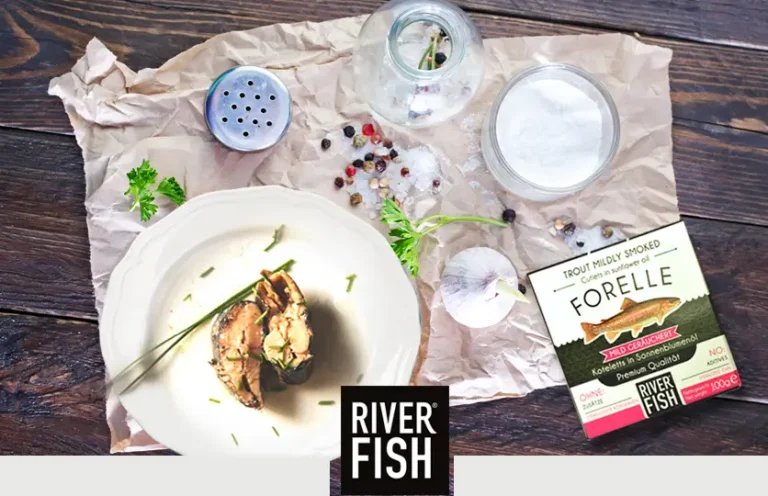
Last Catch 2016 continues the tradition of rare preserved fish through a decade-aged smoked trout from Lake Zaovine. Only 6,000 tins remain, with no reissue.
Discover Last Catch 2016