

Freshwater Fish Preservation · Heritage & Science
The Science and Art of Preserving Freshwater Fish
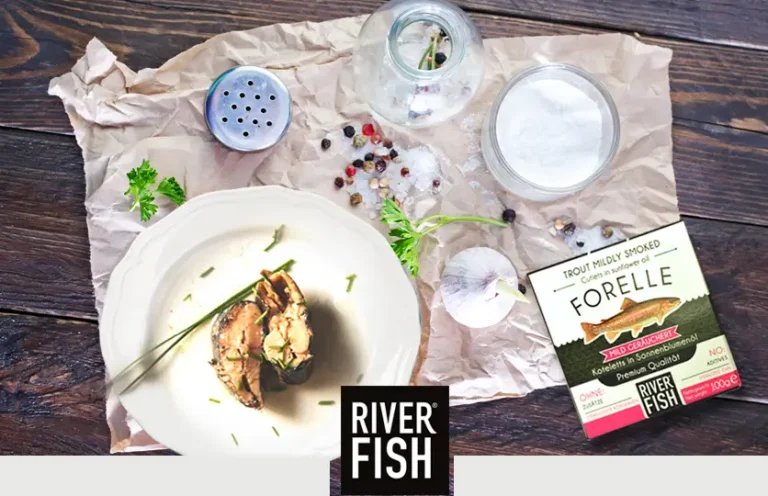
Freshwater fish preservation is one of the oldest crafts in the human kitchen, from carp buried in rice for years to trout gently smoked and sealed in olive oil. This is the science and the story behind every tin of Last Catch 2016.
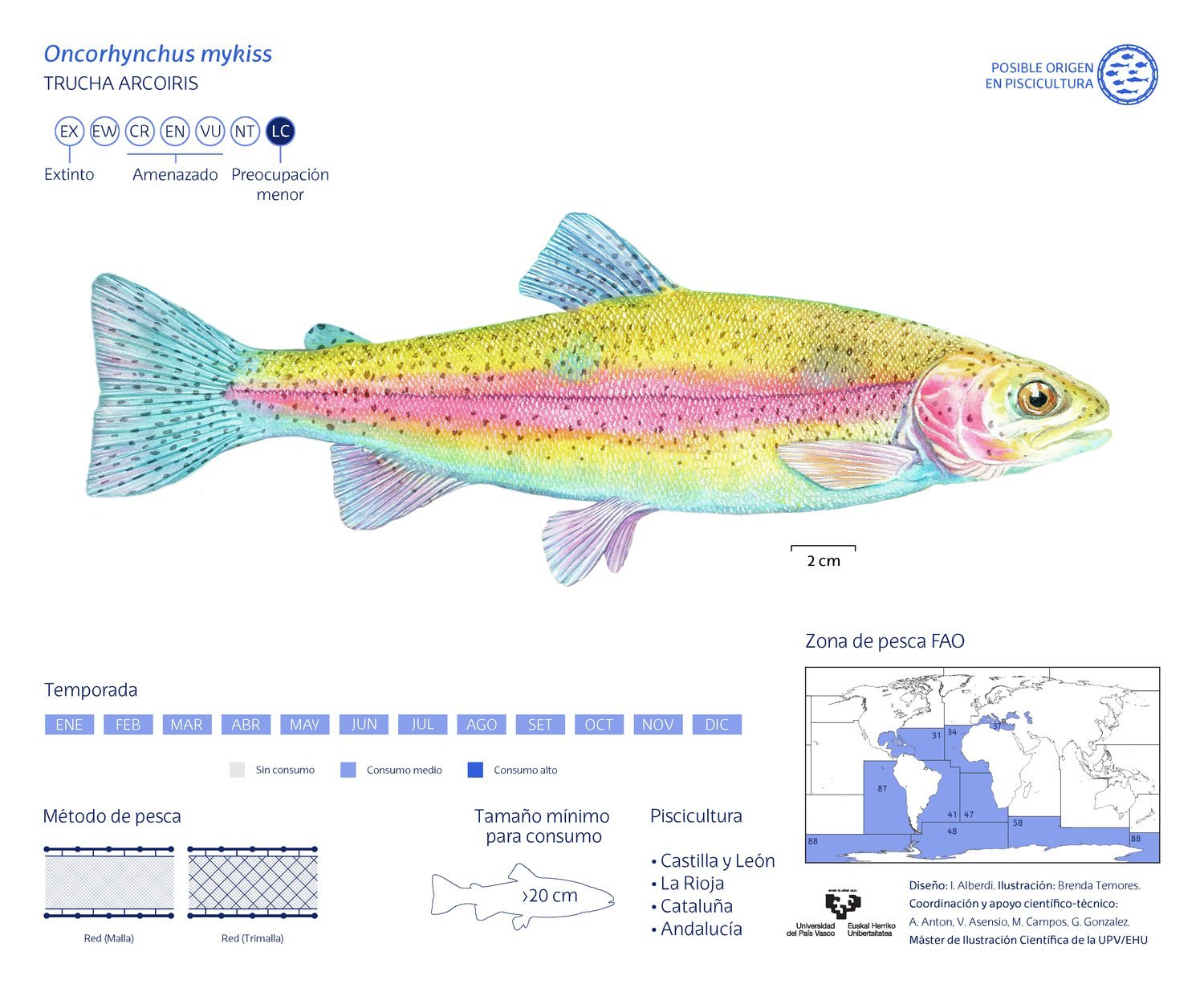
Long before refrigeration, humans faced a simple problem with a difficult answer: how do you keep a fish worth eating for months, or even years, after it leaves the water? For freshwater fish, the answer became one of the oldest and most inventive crafts in the human kitchen. From carp buried in rice for years to trout gently smoked and sealed in olive oil, the story of freshwater fish preservation is a story of patience, chemistry, and taste.
It is also the story behind every tin of Last Catch 2016. To understand why a ten-year-aged rainbow trout from a Serbian mountain lake is possible at all, it helps to walk through the techniques that made freshwater fish preservation an art, and to see where the science begins. It begins, perhaps surprisingly, not with fire or salt, but with water.
Every method here shares one goal: to hold a fish still in time. Some do it with acid, some with heat, some with smoke and oil. The rarest do it with all of these, and then add the one thing no technique can hurry.
Freshwater Fish Preservation Begins With Clean Water
Freshwater fish carry a secret that sea fish do not. In ponds, lakes, and especially in modern recirculating farms, tiny microbes produce two compounds, geosmin and 2-methylisoborneol, and it is well established that their build-up in the flesh is what causes the earthy and musty off-flavours often associated with freshwater fish. Once these compounds accumulate in the fatty tissue, the fish can become unsellable because of that distinct muddy taste and smell. The human nose is astonishingly sensitive to them: for rainbow trout, the level at which geosmin becomes noticeable has been estimated at around 0.9 micrograms per kilogram, a vanishingly small amount.
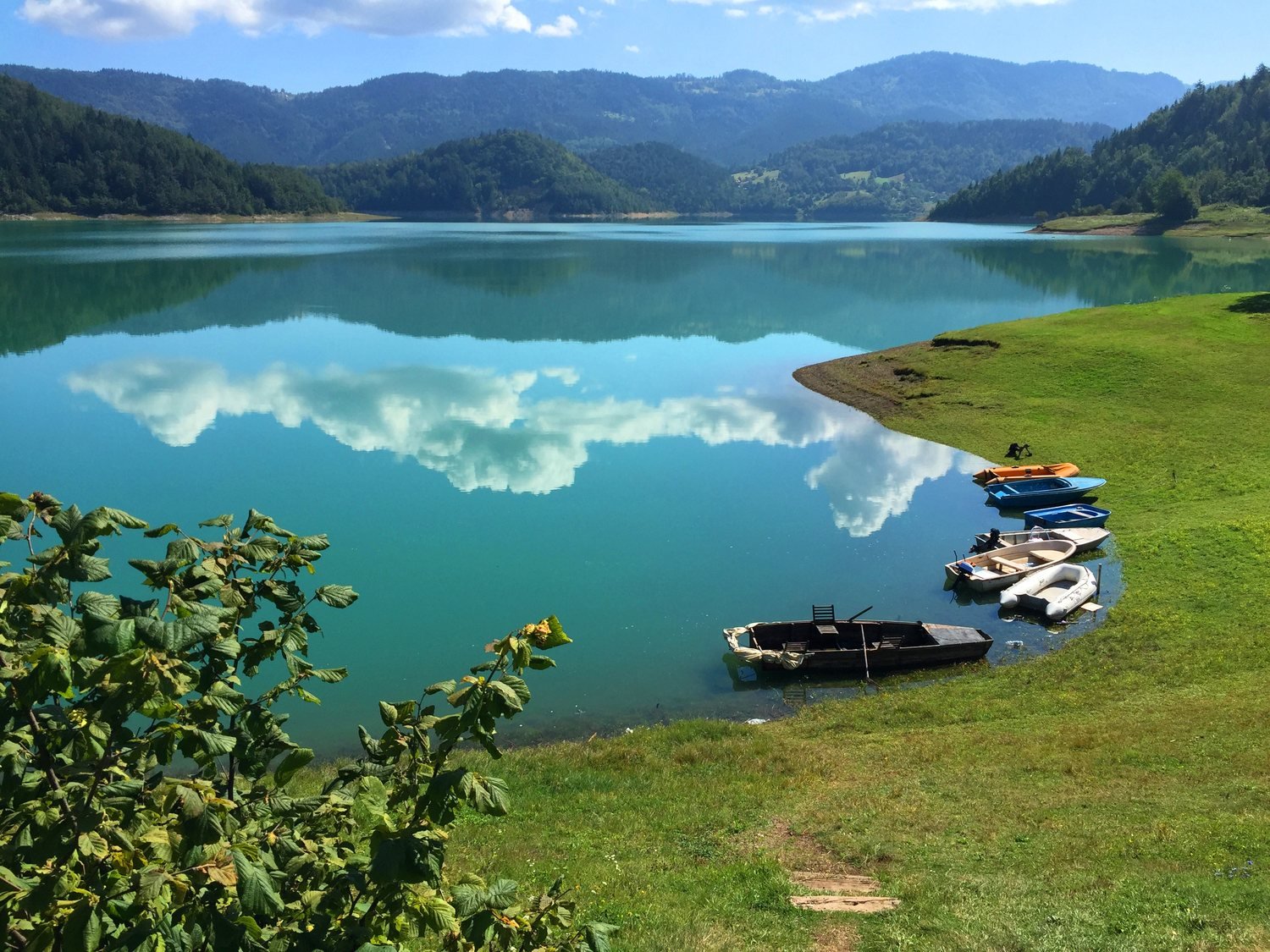
The modern industry has a fix. Producers hold the fish in clean, flowing water and stop feeding them, so the compounds slowly diffuse out of the flesh, a process called depuration or purging. At one leading research facility, rainbow trout and salmon are purged for about six days in clean spring water. This is where good freshwater fish preservation truly begins, and it is the quiet advantage written into Last Catch 2016. Where an industrial farm must correct off-flavours after the fact, the cold, clear mountain water of Lake Zaovine means they never develop in the first place. Good freshwater fish preservation starts upstream of the kitchen.
Fermentation: The Oldest Freshwater Fish Preservation
The oldest method of all needs no can and no fire. This form of freshwater fish preservation is thought to have originated in the interior of Southeast Asia, in the region of northern Thailand and Laos or southern China, and was probably carried to ancient Japan together with rice farming. It survives today as funazushi, a specialty of Lake Biwa: nigorobuna, a freshwater carp native to the lake, is salt-cured for months, then packed in cooked rice and left in an airless environment for about a year, and sometimes repacked in fermented rice for up to four years.
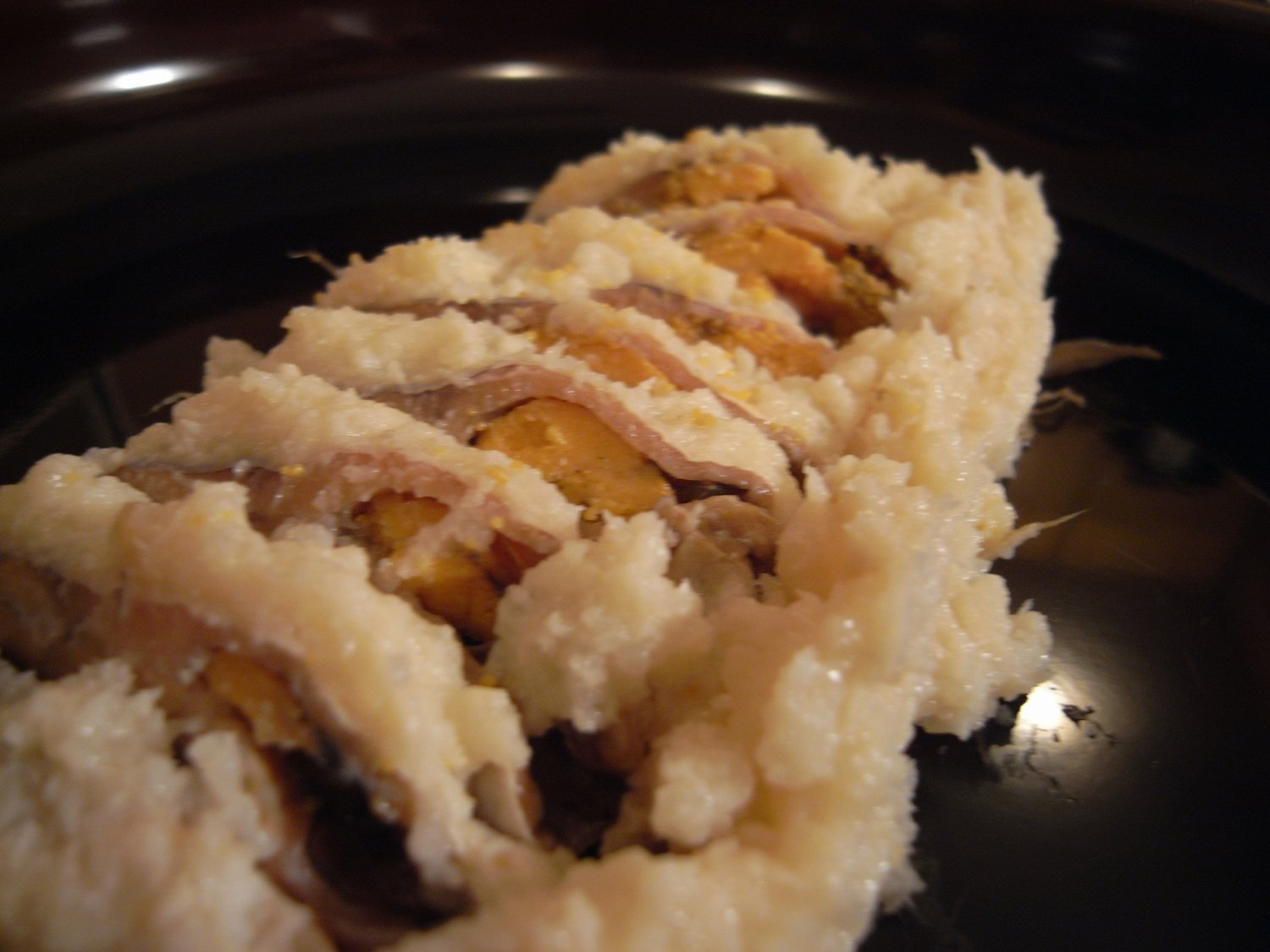
The chemistry is elegant. Freshwater fish carry natural bacteria on their skin and in their gut, and in that airless mix of rice and salt they convert carbohydrates into lactic acid, which lowers the pH to around 4.0 to 4.5, a level at which harmful bacteria cannot survive. The result is exactly what our own tins chase: lactic fermentation gives the fish a deep, savoury richness and tenderises it until it can be eaten bones and all, and in a dark, room-temperature store the fish can keep for years, even decades. Funazushi is a fifteen-hundred-year-old proof of a radical idea: a freshwater fish, properly handled, can become better with age rather than worse. It is, quite literally, the ancestor of sushi.
Canning: Sealing the Catch for Years
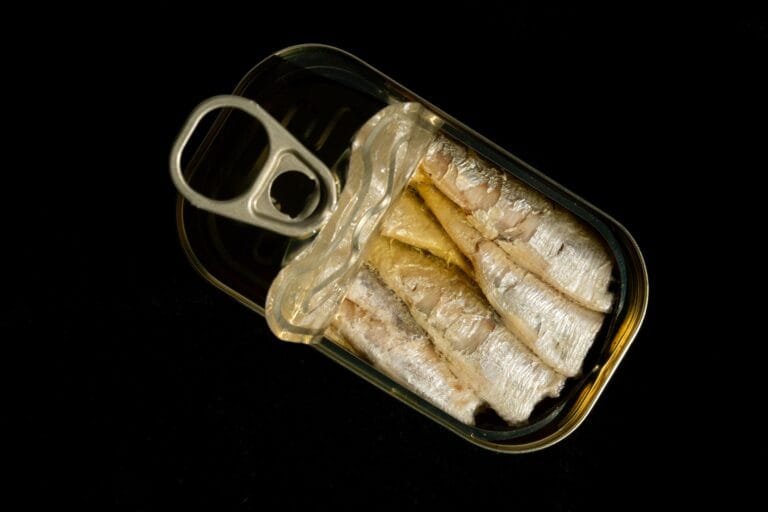
The technique most people picture is younger, and French. Sterilisation was invented in 1795 by Nicolas Appert, whose method of sealing food in a container and heating it created the canned food we know today. Applied to fish, the principle is unforgiving but simple: fish is a low-acid food, so it cannot be safely preserved in a boiling-water bath and must be heat-processed under pressure, a step that sterilises both the fish and its sealed container and locks out the outside world.

Freshwater fish take to this beautifully, and much of modern freshwater fish preservation still rests on the principle. Fatty species such as trout, pike, and catfish are considered ideal candidates, while very lean fish are better eaten fresh. A few details of the process sound almost magical: it is not necessary to remove skin, scales, or bones, because the heat softens them until they are edible, and since the fish releases its own juices, no water needs to be added. Leaner fish are helped by a little added oil. Industry refines this further, sometimes precooking the fish to loosen skin and skeleton, though that can cost texture, and even using a natural enzyme to reduce the pale curd that can form on the surface. What matters is the outcome: time, sealed inside metal, held still.
Smoke, Oil and Modern Freshwater Fish Preservation
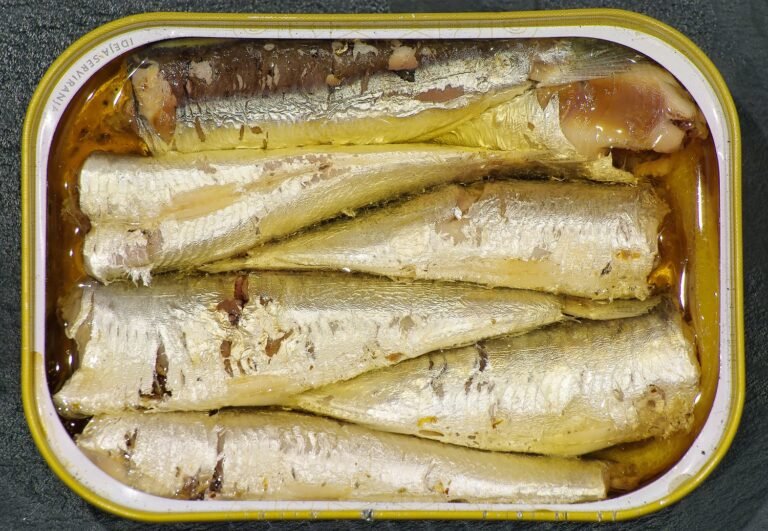
The most delicious chapter combines several techniques at once. It is where freshwater fish preservation stops being mere survival and becomes a pleasure. Smoking is an ancient preservative in its own right, and canning smoked fish is much like canning fresh fish, only the fish is partly smoked first. In the premium tradition, the trout is cooked and smoked, the bones are removed, and the fillets are cut to fit the tin and sealed in extra virgin olive oil, which gives the fish a flaky, silky texture without overpowering it.
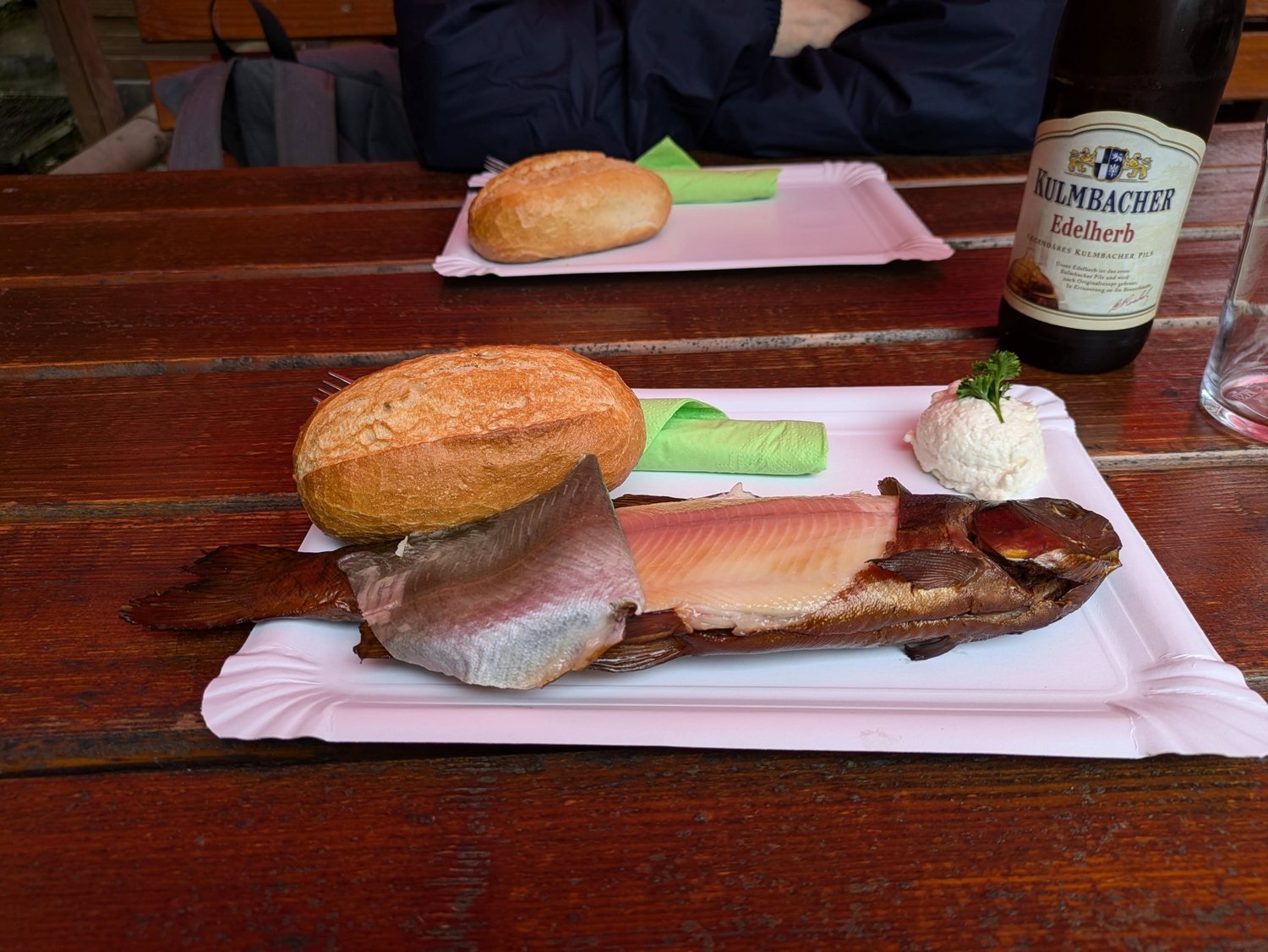
This is the wave Last Catch 2016 rides, and it is thriving. In Denmark, trout is slow-smoked over beechwood in small batches and hand-packed in olive oil at micro-canneries; in northern Portugal, rainbow trout is smoked over holm oak and tinned in oil. Canned trout is increasingly celebrated as a delicate freshwater alternative in a world of tinned sardines and mackerel, buttery and mild, and naturally rich in omega-3. The craft is spreading. What almost no one else offers, though, is the one ingredient that cannot be rushed.
A Secret, Not a Patent
Every craft in this story guards something. The funazushi families of Lake Biwa each keep a recipe handed down like an heirloom, and the old canneries of Brittany never fully explained how a tin should be turned, or why one cellar’s fish emerged finer than another’s. Last Catch 2016 belongs to that lineage in the most literal way. The method by which River Fish prepares and ages its trout was developed by the company’s founder, Milovan Trišić, and it has never been written into a patent, a recipe card, or a public document of any kind.
That silence is deliberate. A patent, Trišić points out, is not protection but publication: to register one is to hand the world a precise, legally readable description of the very thing that makes your process unlike anyone else’s. In a market where patent rights are not always honoured, that description is less a shield than an invitation, a set of instructions delivered straight to whoever cares to copy them. So he chose the older and harder form of protection. He chose to say nothing.
He offers a single, famous parallel. Coca-Cola never patented its formula either. For more than a century it has kept it as a guarded secret rather than surrender it to the public record, and concealment has only deepened the legend. River Fish follows the same instinct, on a far smaller and quieter scale.
What actually happens to a rainbow trout in the long dark between the clean water of Lake Zaovine and the sealed tin that is opened a decade later, no outside eye has fully seen. It is not simply that the fish is left alone for ten years. Something is done, at the beginning and along the way, so that the trout does not merely survive that decade but is remade by it, the flesh turning silken, the flavour deepening into a register a fresh fish never reaches. How that transformation is coaxed, in what order, by whose hand, remains known to a circle you could count on the fingers of one hand. Ask, and you will get warmth, a story, perhaps a glass of something, and no answer. Even those closest to the brand hold only a fragment of the whole, and the founder keeps the rest where he has always kept it, unspoken.
Perhaps that is the point. Some things lose their magic the instant they are explained. Last Catch 2016 offers the proof and keeps the recipe: a freshwater fish that grows rarer and finer with every passing year, made by a method that has never been, and may never be, put into words.
Last Catch 2016: Freshwater Fish Preservation, Perfected
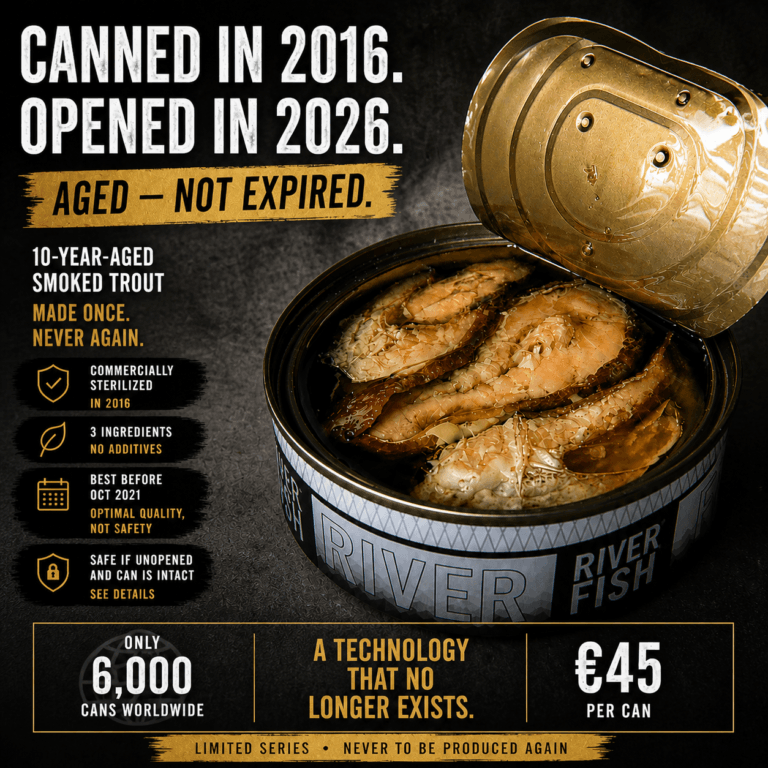
Every thread of this story runs through a single tin. Last Catch 2016 begins where good freshwater fish preservation must, in the clean alpine water of Lake Zaovine, so the earthy off-flavours that trouble farmed fish never appear. The trout is lightly smoked, echoing centuries of smokehouse craft, then sealed in oil in the autumn of 2016 and left in silence ever since.
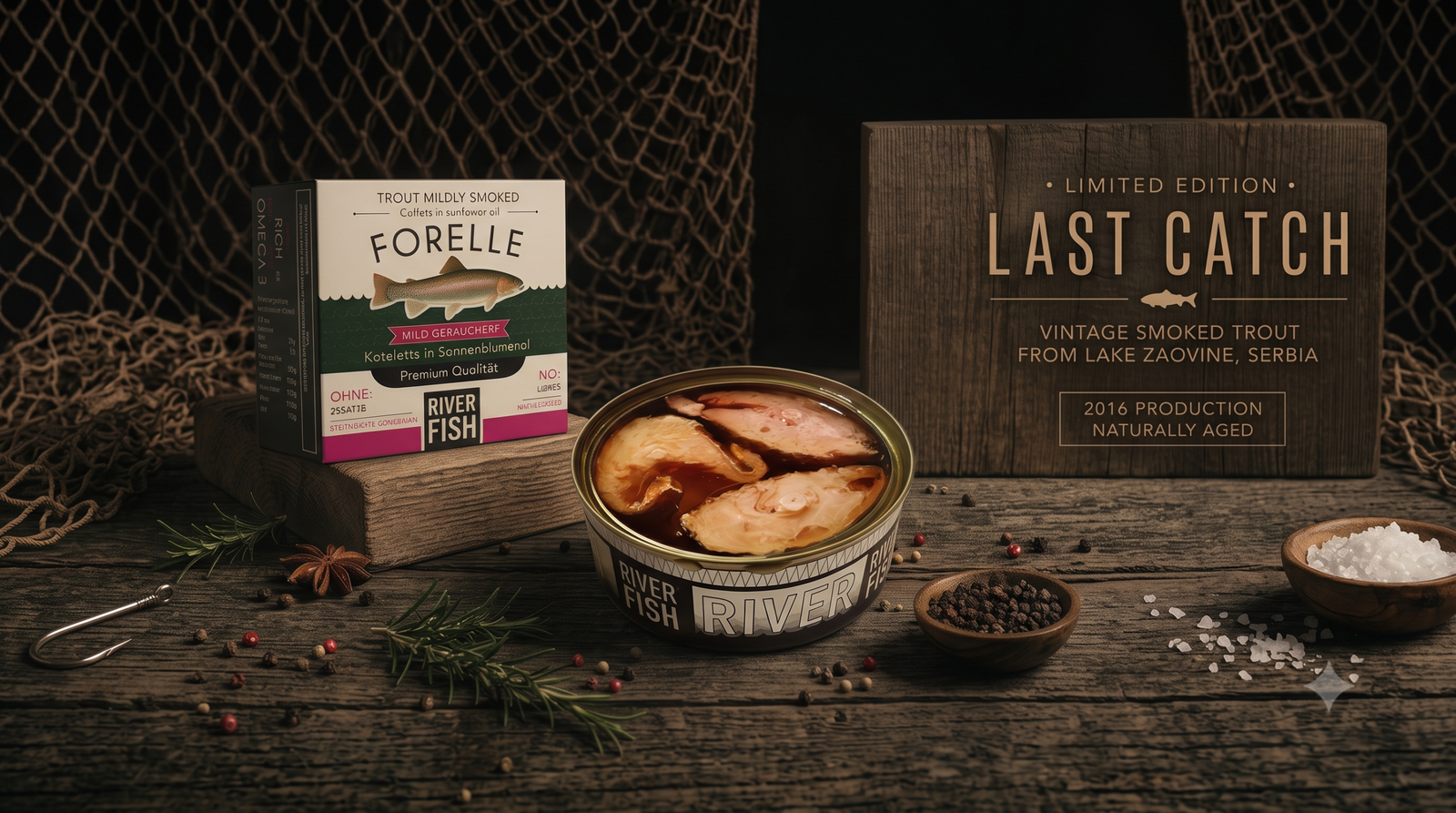
And then comes the ingredient that funazushi understood fifteen centuries ago and that no modern cannery is patient enough to offer: a decade of time. Where Denmark and Portugal sell their smoked trout within the year, Last Catch has let a single vintage rest for ten, so the flesh softens, the oil marries the fish, and the flavour deepens into something rare. As we explored in our writing on millésime canned fish, it is the ancient wisdom of the rice barrel and the modern craft of the olive-oil tin, held together by patience. Only 6,000 tins remain, and like any true vintage, the year cannot be caught again.
How to Secure Last Catch 2016
For collectors and gift-givers drawn to the same patience that defines this craft, Last Catch 2016 is available in three formats, with worldwide shipping:
One Tin · €45
A singular gesture. One tin, one vintage, one story, for the collector who understands that rarity cannot be reissued.
Three Tins · €129
Three tins together: one to open now, two to keep, so you can taste the same vintage evolve across the years.
The Archive Edition of twelve tins (€480) ships free worldwide, the natural choice for those building a proper reserve of their own.
Secure Your Last Catch 2016
Only 6,000 tins exist worldwide. No reissue, no restocks. Once this final vintage is exhausted, the year cannot be caught again. For a freshwater fish that carries a decade of silence, and a secret, this is the moment.
Explore Last Catch 2016